Our Latest Article
Understanding Corporate Law Through Companies Act, 2013
Introduction
Corporate law in India mainly comes from the Companies Act, 2013. This law explains how companies are formed, managed, and regulated. It also defines the rights and duties of everyone connected to a company, including directors, shareholders, and employees.
-
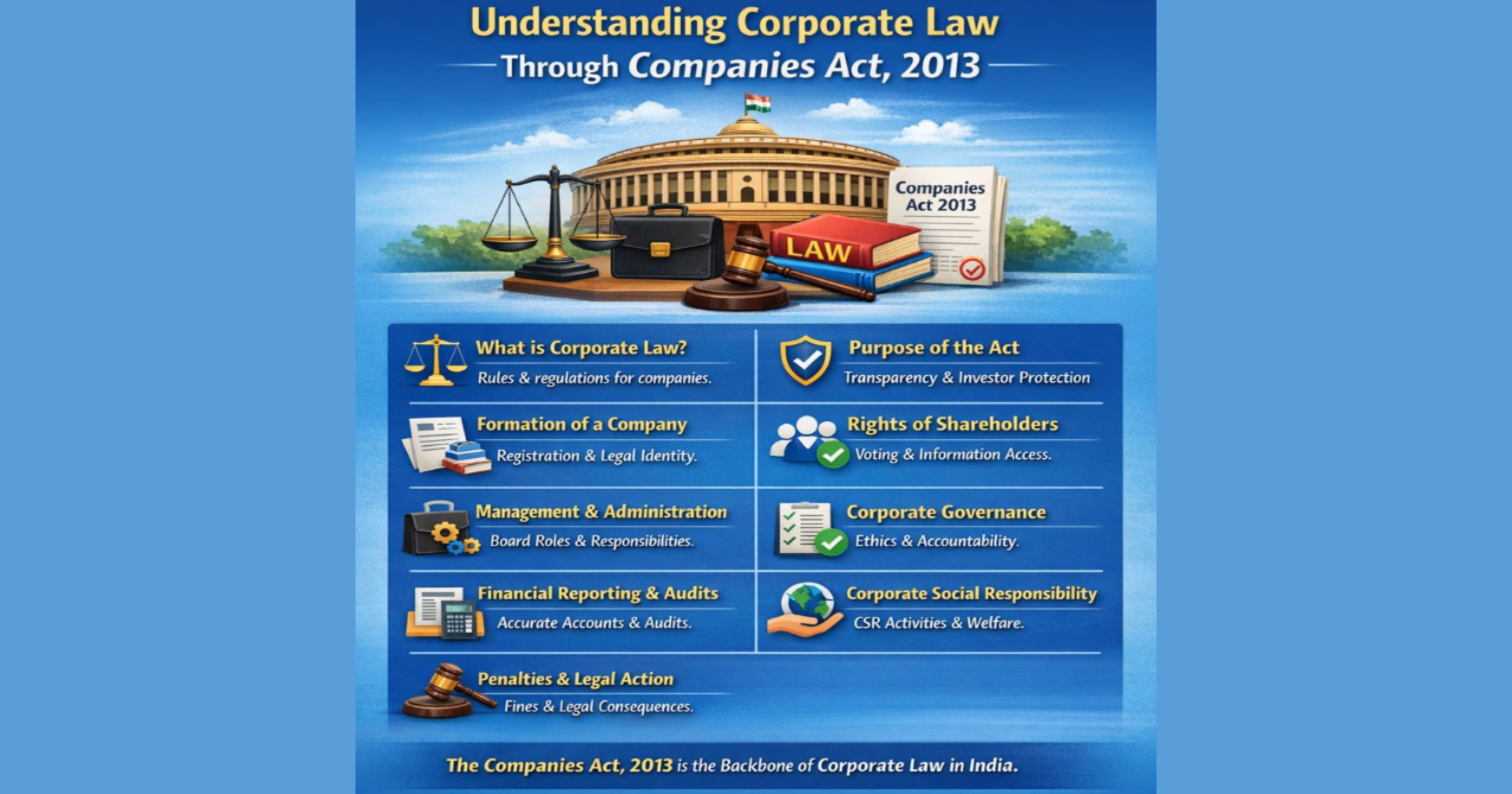
What Is Corporate Law?
Corporate law deals with the rules and regulations that control companies. It ensures that businesses operate in a fair, transparent, and legal manner. In India, the Companies Act, 2013 is the foundation of corporate law. -
Purpose of the Companies Act, 2013
The Companies Act, 2013 was introduced to:- Improve transparency in business operations
- Protect investors and shareholders
- Prevent fraud and mismanagement
- Promote ethical and responsible corporate behavior
-
Formation of a Company
The Act explains how a company is formed, including:- Company registration with the Registrar of Companies (ROC)
- Memorandum of Association (MOA) and Articles of Association (AOA)
- Legal identity of the company
-
Management and Administration
Corporate law under the Act defines how companies are managed. It clearly states:- Roles and responsibilities of directors
- Powers of the Board of Directors
- Rules for decision-making and meetings
-
Rights and Protection of Shareholders
Shareholders are the owners of the company. The Act protects their interests by:- Giving voting rights
- Ensuring access to company information
- Allowing participation in important decisions
-
Corporate Governance
The Companies Act, 2013 focuses strongly on good corporate governance. It promotes:- Transparency in financial reporting
- Independent directors
- Audit committees
-
Financial Reporting and Audits
The Act makes it mandatory for companies to:- Maintain proper books of accounts
- Prepare financial statements
- Conduct regular audits
-
Corporate Social Responsibility (CSR)
Under the Act, certain companies must spend part of their profits on social welfare activities. CSR encourages businesses to contribute to society through education, health, and environmental projects. -
Penalties and Legal Action
The Companies Act, 2013 includes strict penalties for non-compliance. Directors and officers can face fines or imprisonment for serious violations, ensuring discipline in corporate operations.
Conclusion
The Companies Act, 2013 is the backbone of corporate law in India. It creates a strong legal framework that supports fair business practices, protects stakeholders, and encourages responsible corporate growth.